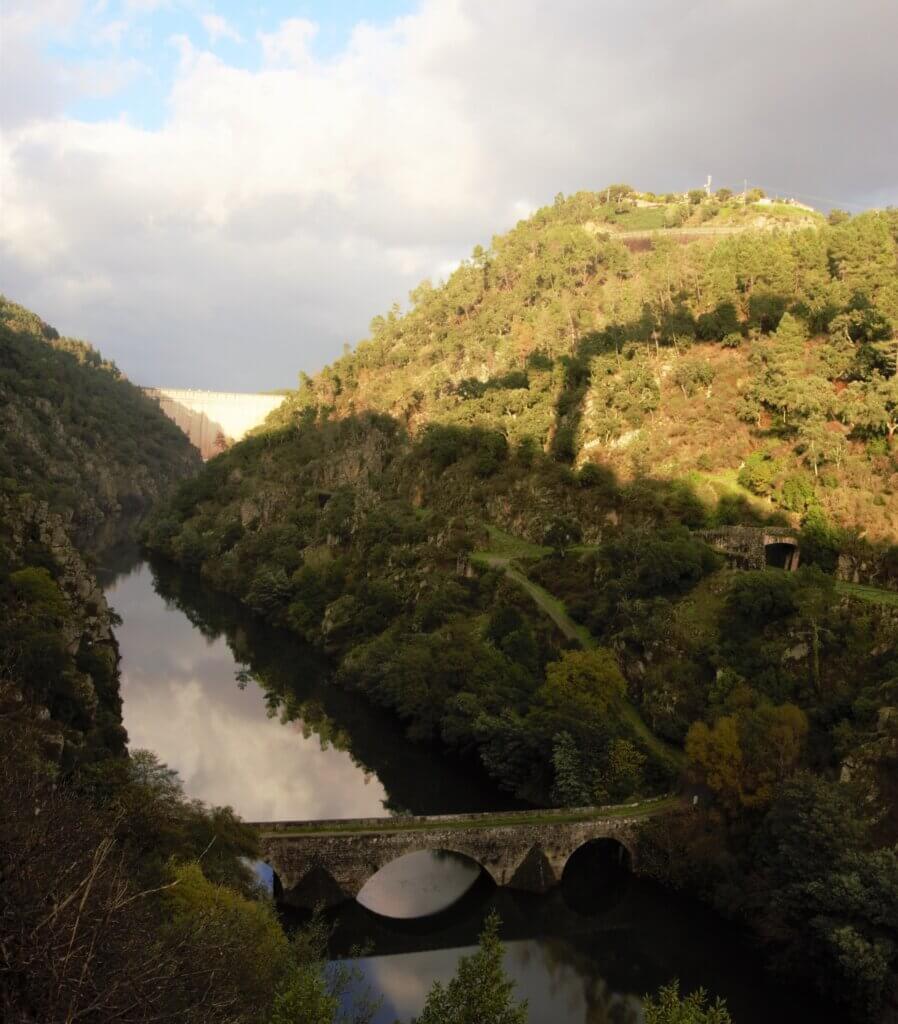

The Philippine Bridge dates back to the period between 1607 and 1610, having been built during the Philippine dynasty. Due to its age, it features a construction with large granite blocks and has three arches. This bridge was the only way to connect to Pedrogão Grande until 1954, when the Cabril Dam was built.
To get there, make sure you have the right clothes and shoes, and don’t forget to bring water so you can make the most of this nature walk.
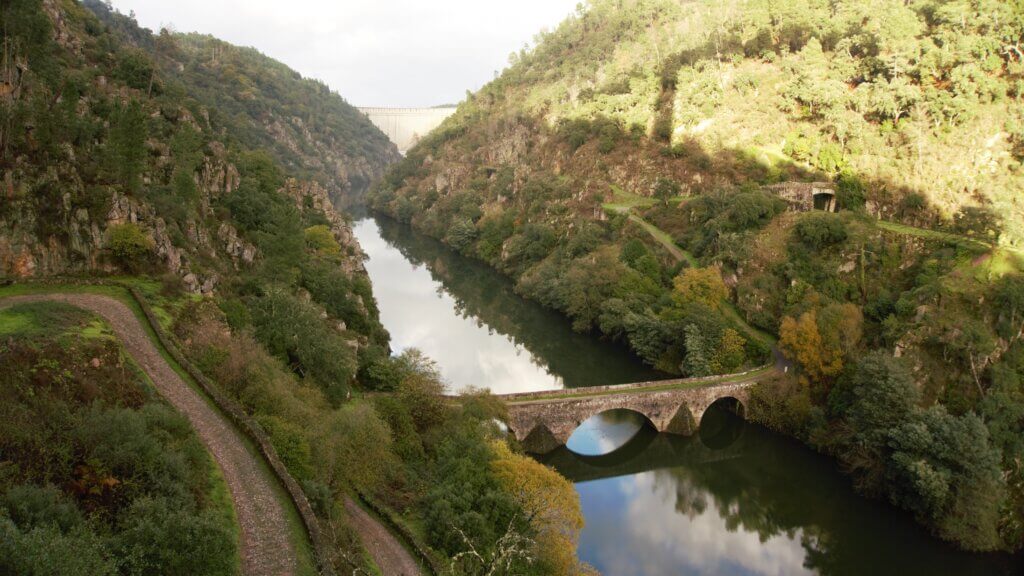
By hiking the Pedrogão Pequeno Shale Trail, you will have the opportunity to observe all the biodiversity that exists in the region.
This path was previously used by our ancestors who lived there; nowadays it is a well-marked route that allows you to independently explore the region and its fantastic landscapes.
To begin this journey, you will have to travel to the Pedrogão Pequeno market and from there follow a Roman road, called Via Romana, towards the Zêzere River. At the end of the descent of this road, simply take a small detour and you will find the Philippine Bridge.
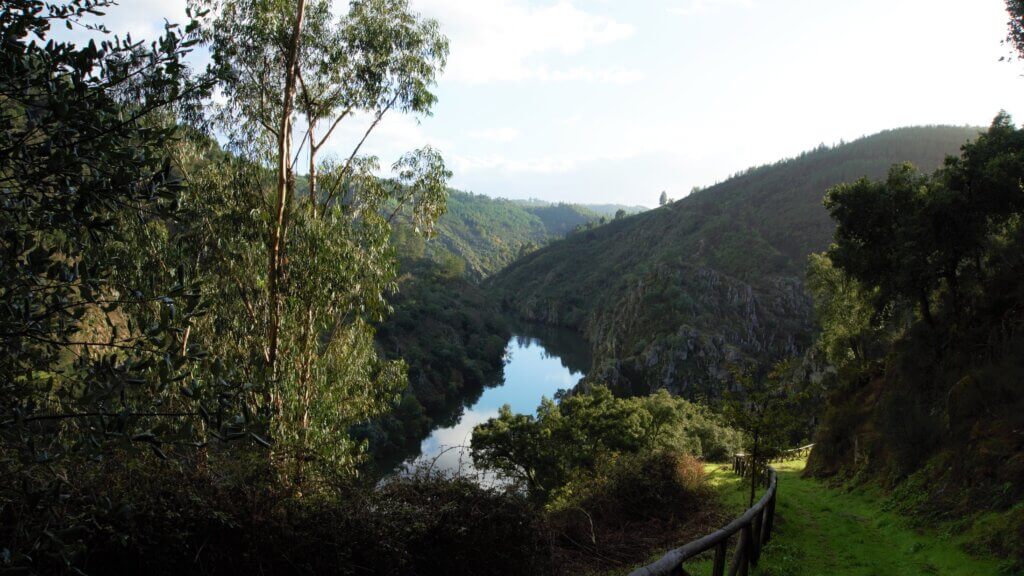
Along this route, you will find interpretive panels showcasing much of the environmental and heritage richness of the region.
After the Philippine Bridge, you can continue along the Pedrogão Pequeno Shale Trail, passing through the Moinho das Freiras Tunnel, the Moinho das Freiras (to learn more about this place you can read our article on the “3 wonders of the Sertã municipality” ), the Miradouro viewpoint, Painho, and the Fonte das Aveleiras fountain. This route is circular, so it starts and ends at the same point, at the Pedrogão Pequeno Market.
Are you ready for your next adventure?